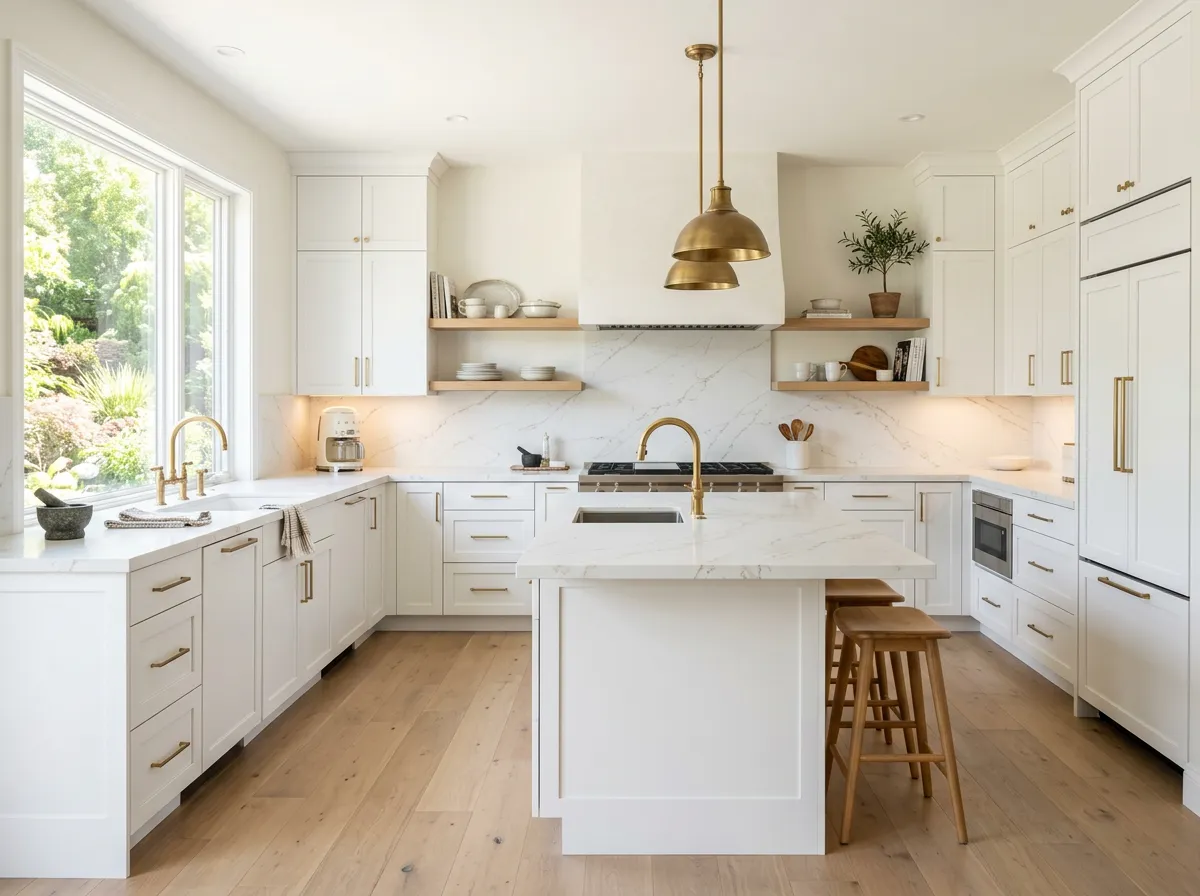
For indoor Florida kitchens, engineered quartz is the lower-maintenance choice: it is non-porous and never needs sealing. For a lanai, summer kitchen or a counter in direct sun, choose natural stone. Most major quartz warranties, including Caesarstone and Cambria, cover indoor installations only.
What's actually different between quartz and granite?
Granite is a slab of natural stone, cut and polished. Every piece is different, and the pattern runs through the stone. Quartz is engineered: ground natural quartz bound with resin and pigment, pressed into slabs. That resin is the source of almost every practical difference between the two.
Porosity and sealing: granite is porous and is normally sealed, with resealing on a cycle that depends on the stone and the sealer used. Quartz is non-porous and is not sealed, which is why it shrugs off red wine, citrus and oil without much thought. The Natural Stone Institute is a good neutral reference if you want to read up on stone care before you decide.
Heat: granite handles a hot pan better than quartz. The resin in quartz can scorch or discolor under direct heat, so trivets are not optional on an engineered surface. Both materials can crack from thermal shock at a seam or near a cutout, so neither is a place to set a pan straight off a 450-degree burner.
Seams and repairs: quartz seams are usually easier to hide because the pattern is consistent and color-matched adhesive is predictable. A chip in quartz can often be filled by a fabricator; a chip in granite can be filled too, but the repair reads differently depending on the grain. Day to day, both clean with mild soap and water. Neither likes bleach, oven cleaner or abrasive pads.
Does Florida humidity ruin countertops?
Humidity does not hurt either stone. This is the question we hear most, and the honest answer is that the slab is the part of your kitchen least bothered by Florida air.
What humidity does affect is everything under and around the counter. Cabinet boxes made of low-grade particleboard swell when they take on moisture, especially under a sink that has been leaking quietly. Adhesives and silicone cure differently in high humidity. A sealed granite top over a cabinet base that is coming apart is still a problem, so when we quote a countertop swap we look at the cabinet boxes, the sink plumbing and the floor underneath first.
Sealing cycles are the one place humidity gets a mention. A granite counter in a kitchen that runs humid because the house is closed up and under-ventilated will want attention sooner than one in a conditioned, well-ventilated kitchen. The test is simple: leave a few drops of water on the stone for fifteen minutes. If it darkens, it is time to reseal.
The lanai and outdoor kitchen question
This is where a lot of Florida homeowners get caught. Engineered quartz is generally not made for outdoor installation, because UV exposure can fade or yellow the resin and pigments over time. The manufacturers say so themselves, in writing, in the warranty.
Caesarstone's US warranty covers indoor installations and the company states its standard surfaces are not for outdoor use (https://www.caesarstoneus.com/warranty/). Cambria likewise does not recommend its quartz surfaces for exterior applications and publishes its warranty terms online (https://www.cambriausa.com/warranty/). Before anyone specifies quartz for a summer kitchen, read the written warranty for the exact brand and series you are buying and confirm it with the supplier.
For a lanai, pool kitchen or any counter sitting in hard afternoon sun through a wall of west-facing glass, natural stone is the safer specification. Granite is UV stable. Porcelain and sintered surfaces are also built for exterior use if you want a lighter, more uniform look. If you love a quartz color and want it anyway, put it indoors and choose a companion stone outside.
Coastal homes and salt air
Near the water in Miami Beach, the Jacksonville beaches or along Bayshore, salt is in the air and on everything. Salt does not eat granite or quartz, but it does accelerate corrosion on the metal around them: faucets, sink clips, undermount brackets, cabinet hardware and appliance trim.
The practical move on a coastal kitchen is to spend on the hardware. Stainless with a higher corrosion rating, solid-brass faucet bodies and quality mounting clips outlast budget parts by years in salt air. Wipe counters and fixtures with fresh water and a mild soap rather than letting salt residue sit.
Skip the vinegar, bleach, ammonia and anything labeled as a heavy-duty degreaser on either material. Acids etch the sealer on granite and can dull polished stone; harsh solvents attack the resin in quartz. Mild dish soap, warm water and a soft cloth is genuinely all either surface needs.
Where cheap fabrication shows up two years later
The slab is rarely the thing that fails. Fabrication is. Overhangs are the usual culprit: an island bar top cantilevered too far without steel or bracket support will eventually crack, usually at the weakest point near a seam or a cutout. Ask what the overhang is and how it is being supported before the slab is templated.
Cutouts for sinks and cooktops want clean inside radii, not sharp 90-degree corners that concentrate stress. Undermount sinks need proper mechanical support, not adhesive alone. Edge profiles are a style choice, but a thicker eased or mitered edge gives you more material to work with if the counter ever gets chipped near the dishwasher.
Templating matters too. Florida houses settle and walls are rarely square. A digital template taken after the cabinets are set and leveled, not before, is what keeps the backsplash gap tight and the scribe clean.
How countertops fit into the rest of the kitchen
Countertops are one decision inside a larger sequence. Cabinets get set and leveled, counters get templated and installed, then backsplash tile goes in against the finished counter, then fixtures and finishes. Flooring timing depends on whether it runs under the cabinets or stops at the toe kick, and that decision has to be made early, not when the installer shows up.
When separate contractors handle each trade, the gaps between them are where schedules slip. At Blue Diamond Construction, one team manages the multi-trade work with a single point of contact, so the tile crew is not standing in a kitchen waiting on a template that was never ordered. You can see the full scope on our kitchen remodeling page, and our post on kitchen remodeling trends in Florida homes covers the design side.
Cost depends on size, materials, layout changes and scope, so every project is quoted on site. Estimates and consultations are free, financing is available through our partner Acorn Finance, and you can request an estimate or call (386) 251-9778.