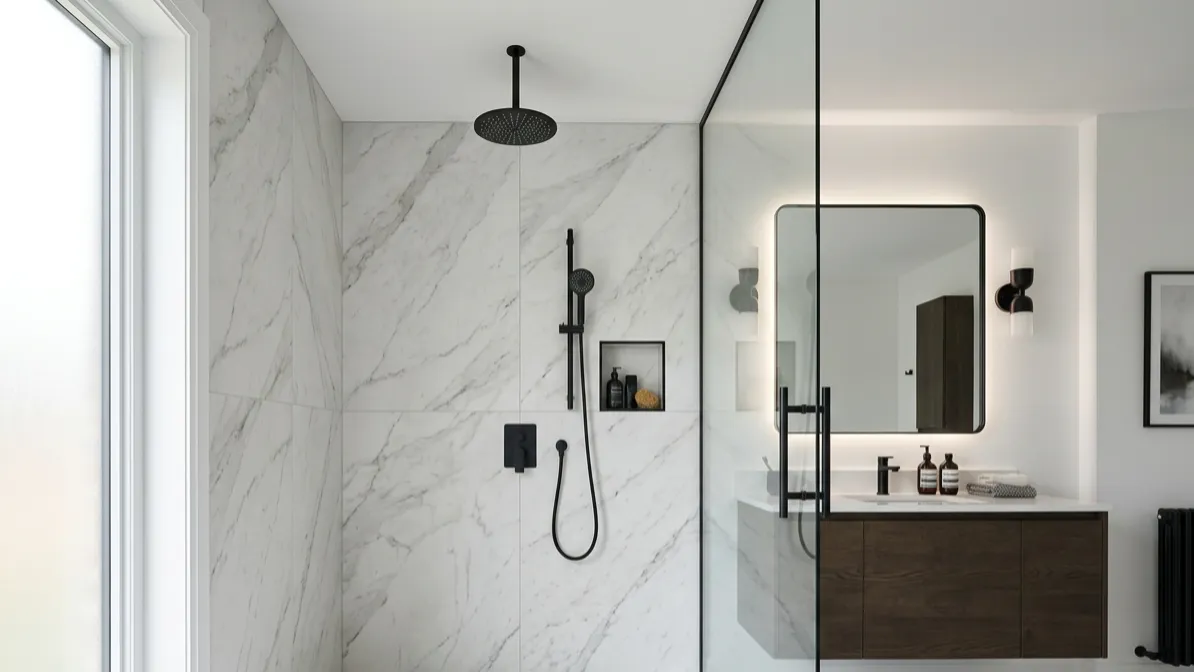
Usually yes. The City of Tampa's residential alterations guide lists "Kitchen/bathroom remodel" under Residential Building Alterations (Renovations), and Tampa's repair/remodel document says a permit is required when work affects structural elements regardless of job cost, and for a change of use. Confirm your scope with City of Tampa Construction Services.
What does the City of Tampa actually say about bathroom remodels?
Tampa's Residential Alterations Permit Application Guide names "Kitchen/bathroom remodel" as an example of the record type Residential Building Alterations (Renovations) (https://www.tampa.gov/sites/default/files/document/2026/new-permit_application_guide_residential_alteration_ada.pdf). So a bathroom renovation is the kind of job the city expects to see come through as a permit application, not something you quietly handle on a weekend.
The city's Repair/Remodel requirements document goes further: a remodeling permit is required if the work affects structural elements of the building regardless of job cost, and for a change of use (https://www.tampa.gov/sites/default/files/document/migrated/p048repairremodel.pdf). The phrase that trips people up is "regardless of job cost." A small budget does not make a structural change exempt.
Where it gets grey is the low end — a vanity swap, new tile over a sound substrate, paint. The documents above don't spell out every minor scope, so the honest answer is to describe your exact scope to City of Tampa Construction Services before work starts and get their read in writing. We do that on our projects as a matter of course, and we'd rather ask than assume.
Why a Hyde Park or Bayshore condo is a different animal
This is the detail almost nobody publishes. Tampa's residential plan review page states that residential plan review applies to single-family residences and duplexes, and that a condominium requires a commercial permit despite having residential occupancy (https://www.tampa.gov/construction-services/residential-permits/new-construction/plan-review/residential-plan-review).
That matters a great deal in the parts of Tampa where condos are common — Hyde Park, the Bayshore Boulevard corridor, downtown. Your neighbor in a Seminole Heights bungalow and you in a Bayshore tower can be doing the identical shower-to-walk-in conversion and be on two different permit tracks.
Practically, plan on a commercial review path with drawings prepared accordingly, and plan on your building's own requirements layering on top: association approval, elevator and freight schedules, work-hour limits, and how material gets in and debris gets out. Those are building rules, not city rules, so get them from your association early. We build that sequence into the schedule rather than discovering it in week two.
What does plan review want to see on the drawings?
Tampa's Residential Remodeling plan review page lists what the submittal needs to include: a layout of the entire existing and proposed floor plan with dimensions, a detailed description of the proposed work, and the current Florida Building Code Residential identified on the plan (https://www.tampa.gov/construction-services/residential-permits/remodeling/plan-review).
Note "entire" floor plan. Reviewers want context for the bathroom, not a one-room sketch. The detailed scope description is also where a lot of applications stall — vague descriptions invite comments, and comments cost weeks.
The same page lists wall sections for new interior walls. If you're closing off a linen closet, furring out a wall to hide relocated plumbing, or building a new partition for a water closet, that detail belongs on the drawings from the start.
The life-safety and bathroom-specific items reviewers check
Tampa's remodeling plan review page specifically calls for existing and proposed smoke detector locations and emergency escape locations (https://www.tampa.gov/construction-services/residential-permits/remodeling/plan-review). Smoke detectors catch owners by surprise — a bathroom project can pull in detector requirements for the surrounding area of the home.
Two items on that list are purely about bathrooms: mechanical ventilation for bathrooms, and proposed bathroom door dimensions. In a humid climate like Tampa's, ventilation is worth taking seriously beyond the permit anyway. An undersized or poorly ducted fan is how new tile work ends up with mildew in the grout lines and a swollen vanity toe-kick a few summers later.
Door dimensions come up when a layout changes — swinging a door the other way, narrowing an opening to gain wall space for a vanity. Decide that at design, not during framing.
Which bathroom scopes usually trigger a permit?
From the city's own language, the triggers to watch are structural work and change of use. In a real bathroom job, that tends to mean: moving plumbing to relocate a toilet, tub or shower drain; removing or altering a wall; adding or rerouting electrical; and converting a tub to a walk-in or curbless shower, which almost always involves both drain relocation and floor framing.
By contrast, straight finish work — swapping a vanity in place, replacing a faucet, retiling a wall that isn't moving — is where owners most often assume no permit. Assume is the operative word. Tampa's published documents don't itemize every minor scope, so confirm with Construction Services before you start.
If you want to see the full range of what a bathroom project can include, from tile and flooring to vanities, fixtures and complete transformations, that's laid out on our bathroom remodeling page.
How we handle the paperwork-to-inspection sequence
Blue Diamond Construction is licensed and insured, and one team manages the whole project with a single point of contact. That matters most in a permitted bathroom, because the drawings, the plumbing, the electrical, the tile and the inspections all have to line up in order. When those are four separate phone numbers, the gaps between them become your delay.
We start with a free estimate and consultation. We walk the space, talk through what you want to change, and get specific about which parts of your scope are likely to need city involvement — before anyone signs anything. If your project is in a condo, we flag the commercial-permit path up front so the schedule reflects reality.
We work in Tampa, Orlando, Miami, Jacksonville and surrounding Florida areas. The permit specifics in this article are City of Tampa requirements; other jurisdictions have their own, and we confirm those locally rather than assuming they match. To get started, call (386) 251-9778 or use the contact form.